Quick note. Please leave no trace. The first thing we did after arriving at our dispersed camping spot was spending ten minutes picking up trash left from the last person there.
Finally made it to the North Rim, it's everything I thought it would be.
I’ve been trying to make it to the north rim for well over fifteen years. Something has always come up. Over the past few years, it seems like wildfires have been the reason that I’ve stayed away. Well, I made it this time. The drive from Chandler was easy enough, took around six hours. Even with gas prices being outrageous it cost just under $100 one way.
Marble Canyon
Finally made it to the pines!
Yep $3.94 a gallon Thank you Democrates
We didn’t drive into the park on the first day, instead, we took forest road 611 to 610 to find a dispersed camping site, right on the rim. In mid-June at 8555 feet, we saw a daytime high of 85 and a nighttime low of 45. Just warm enough to be warm, and just cold enough to be cold. Of course, we picked a weekend that was a heatwave breaking daytime temperatures across four states
Simplicity is just what we needed, and this is what we bought the Ram for. Forest fire roads are my jam!
This is the view from our campsite!
I don't mind seeing a Prius in the forest, just as long as they slow down a bit!
Had a great thunderstorm roll in Friday afternoon.
After setting up camp we sat and took in the views for the rest of the night. Then a quick dinner of dehydrated meals, this trip was about relaxing, and cooking in the backcountry was not an activity either of us wanted to tackle!
As I mentioned earlier it got a little chilly overnight, neither of us got a goodnight's sleep. We had a slight breeze all night, nothing that was disturbing it was just there. As soon as the sun rose above the horizon, the temperature jumped from 45 to 80 in less than an hour and was just plain hot by 9am. We made some adjustments to camp made some breakfast burritos. We had planned just hanging out at camp all weekend, but since it was so warm, we decided to drive into the actual NP Grand Canyon North Rim. We did the site seeing thing, walked around a bit, went to the gift shop and visitors center. Afterward, we went for a drive and went sightseeing a little more by visiting the various outlooks.
Once the heat of the day was over, we headed back to camp. Since neither of us slept very well the night before, we decided it was a perfect day for a nap! Walking up an hour before sunset, we made dinner. After a little star gazing we hit the sack.
Up in time to see the sunrise, we broke camp before 7am, then we sat around and planned our next trip, while doing so we were visited by the neighborhood watch, as a young deer broke from the dense foliage across the camp. It was a perfect send-off. We hit the road by 8am and headed south back to Chandler.
The Dangerous Rise of the Supersized Pickup Truck - Bloomberg
Ugh I really dislike when people talk about things they don't research first... " These passenger-heavy, cargo-lite arrangements are so popular that some automakers — like Ram — have stopped even offering single cabs in their best-selling pickup brands."
Huh that took like 15 seconds to google 🤦♂️ I understand that the large grills on some models are intimidating to the soy-latte crowed. Trucks have gotten larger, harder to store in garages, and for many, harder to get in and out of, but not all of them are massive blocks of steel. Anyways, here's an interesting article that make you scream at the computer.
As U.S. drivers buy more full-size and heavy-duty pickups, these vehicles have transformed from no-frills workhorses into angry giants. And pedestrians are paying the price.
To get a handle on what's happened to pickup trucks, it really helps to use a human body for scale.
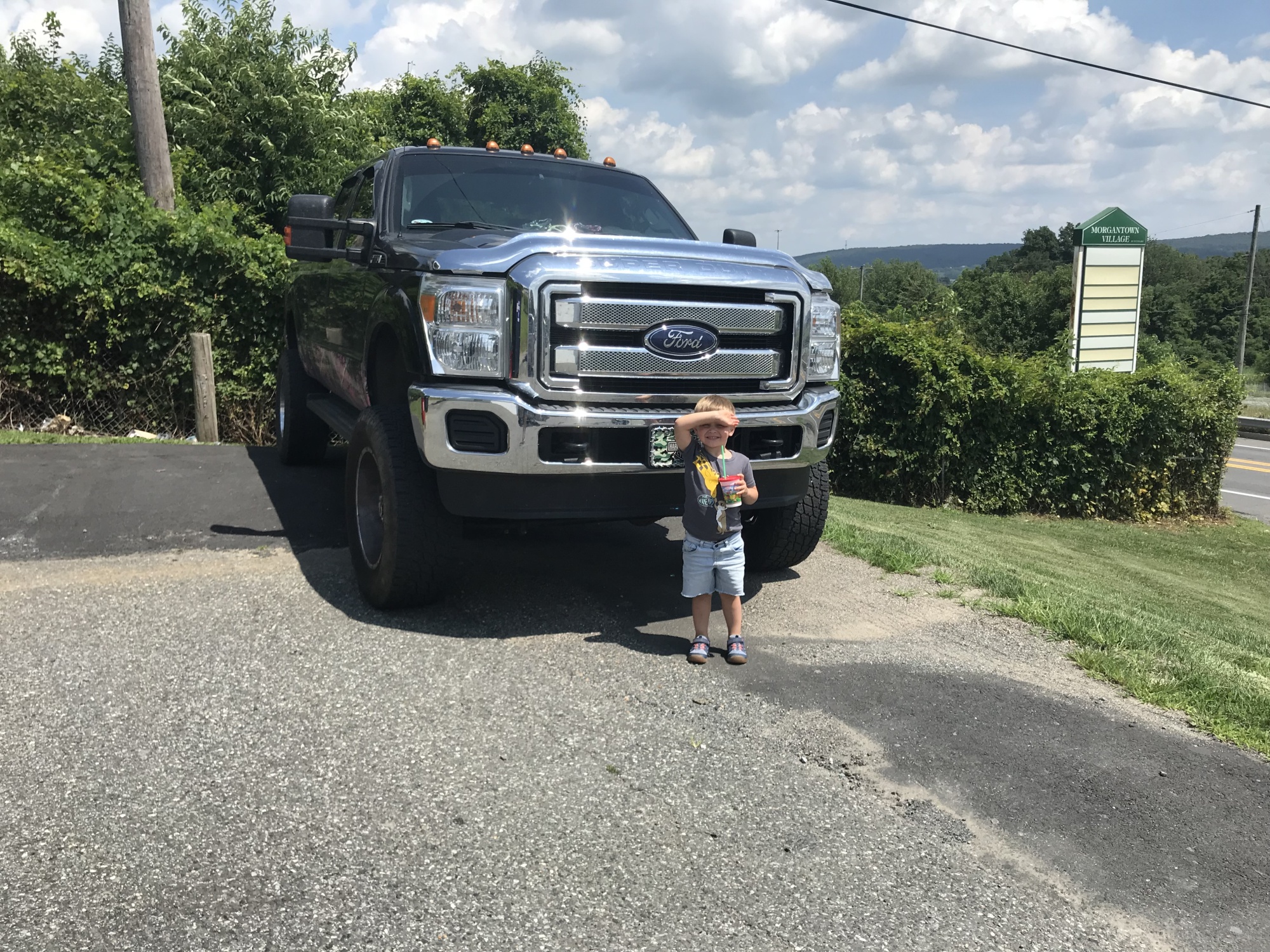
In some nerdy Internet circles — specifically, bike and pedestrian advocacy — it has become trendy to take a selfie in front of the bumper of random neighborhood Silverados. Among the increasingly popular heavy-duty models, the height of the truck's front end may reach a grown man's shoulders or neck. When you involve children in this exercise it starts to become really disturbing. My four-year-old son, for example, barely cleared the bumper on a lifted F-250 we came across in a parking lot last summer.
Look out below.
Photo courtesy Angie Schmitt
Vehicles of this scale saddle their drivers with huge front and rear blind zones that make them perilous to operate in crowded areas. Even car guys have been sounding the alarm about the mega-truck trend recently. A few months ago, the Wall Street Journal's Dan Neil complained about his close encounter in a parking lot with a 2020 GMC Sierra HD Denali: "The domed hood was at forehead level. The paramedics would have had to extract me from the grille with a spray hose."
Since 1990, U.S. pickup trucks have added almost 1,300 pounds on average. Some of the biggest vehicles on the market now weigh almost 7,000 pounds — or about three Honda Civics. These vehicles have a voracious appetite for space, one that's increasingly irreconcilable with the way cities (and garages, and parking lots) are built.
Styling trends are almost as alarming. Pickup truck front ends have warped into scowling brick walls, billboards for outwardly directed hostility. "The goal of modern truck grilles," wrote Jalopnik's Jason Torchinsky in 2018, "seems to be… about creating a massive, brutal face of rage and intimidation."
Giant, furious trucks are more than just a polarizing consumer choice: Large pickups and SUVs are notably more lethal to other road users, and their conquest of U.S. roads has been accompanied by a spike in fatalities among pedestrians and bicyclists. As I wrote in my 2020 bookRight of Way: Race, Class, and the Silent Epidemic of Pedestrian Deaths in America, the Insurance Institute for Highway Safety and the Detroit Free Presshave pointed to the rise in SUVs and large pickups as the main culprit in the pedestrian mortality surge.
The truck trend is contributing to another troubling crash-related disparity: In a new study, the IIHS shows that women — who tend choose smaller vehicles — are suffering higher injury and death rates than their male counterparts, despite the fact than women engage in fewer risks and crash less.
Why have pickup trucks morphed into such huge, angry, and dangerous presences? Traffic safety experts, commentators on U.S. automotive culture, and social scientists have suggested a range of forces behind truck bloat.
The truckification of the family car
One key driver of pickup growth relates to how they are now being used. If you overlook their gleefully violent styling and garage-unfriendly footprint, these vehicles have become more practical as family vehicles.
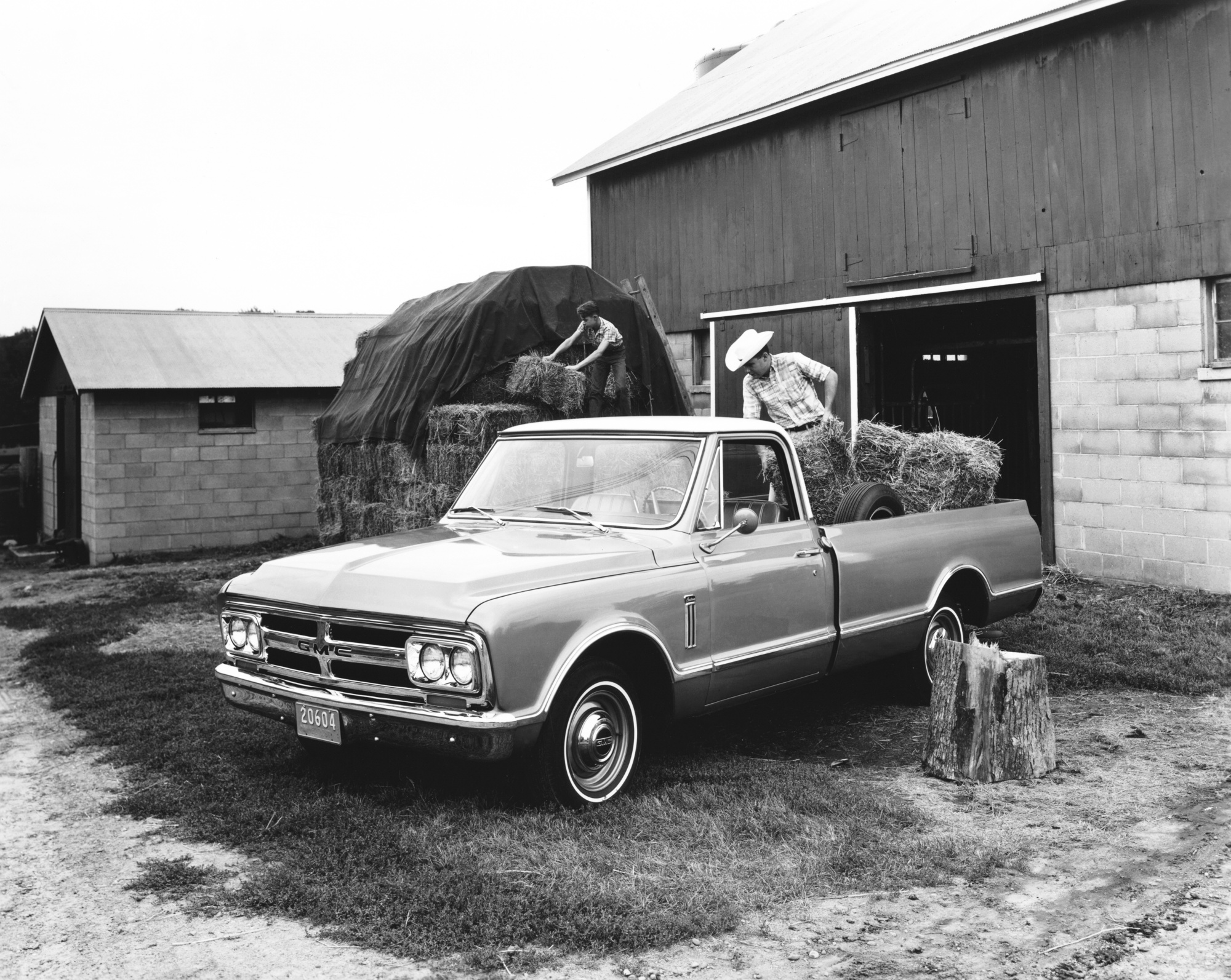
Despite the agrarian pursuits that TV commercials suggest, today's pickup trucks are being built more to haul kids and families than sheep and boulders. Until the 1980s, almost every pickup truck sold in the U.S. had a single cab, meaning seating for three max in a single bench-style seat, with a bed that was eight feet long for a full-sized long-bed vehicle. That old no-frills working-style truck is fading into history.
In 1967, this was a pickup truck.
Photographer: Underwood Archives/Archive Photos
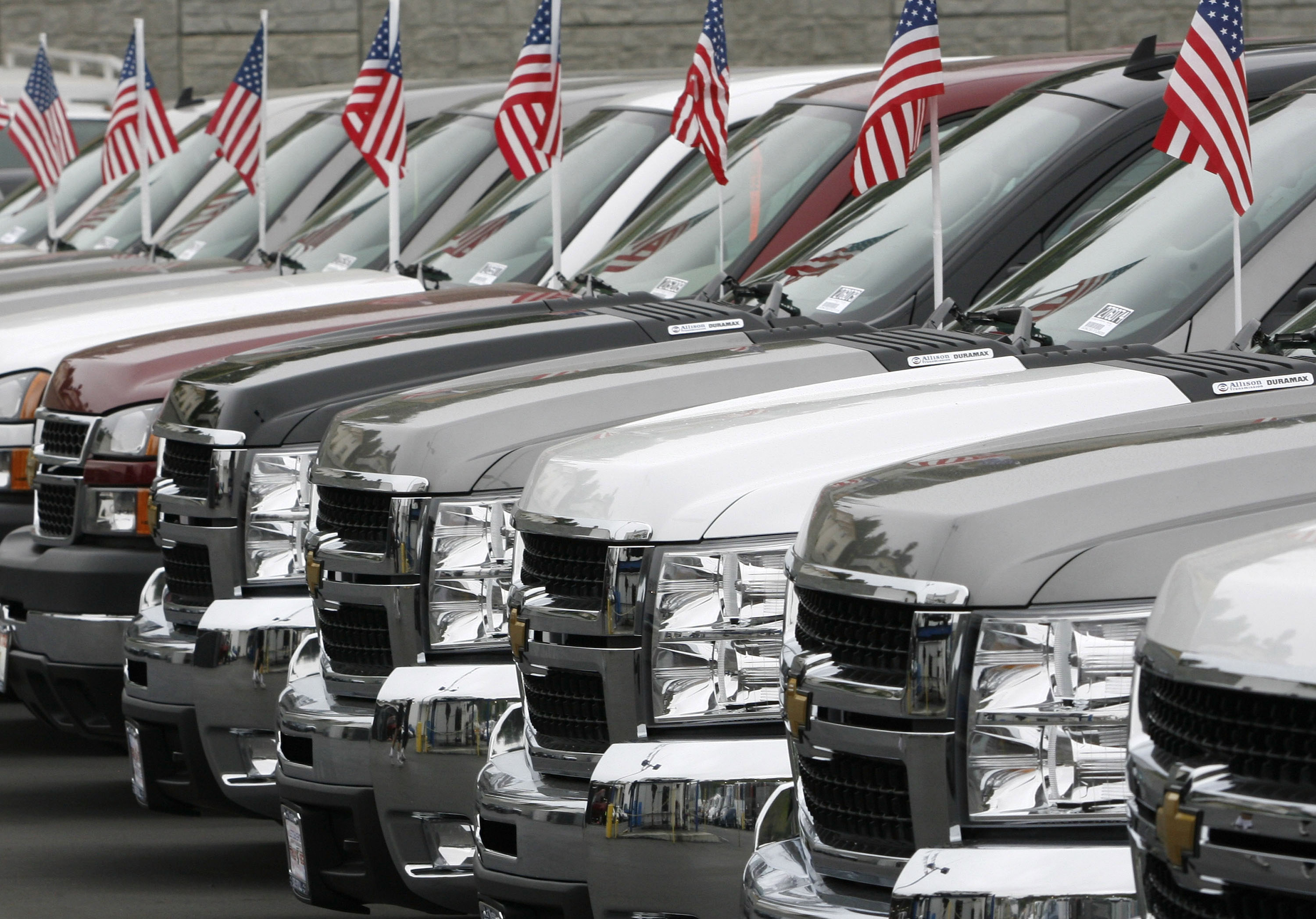
In 2020, 85% of pickup trucks sold had "crew cabs" or "extended crew cabs" or one of a handful of other tough-guy euphemisms with two sets of seats for five people — most with four doors. Some have four regular-size doors. These passenger-heavy, cargo-lite arrangements are so popular that some automakers — like Ram — have stopped even offering single cabs in their best-selling pickup brands.
As pickups transformed into family vehicles, they also became more luxurious. The average truck in the U.S. sells for almost $50,000 now — a 41% increase compared to a decade ago — and many boast posh, feature-laden interiors designed to compete with high-end SUVs and sedans, as auto writer Jim Gorzelany writes in Forbes.
As a result, today's truck owners include all kinds of people who don't necessarily need (and rarely use) these vehicles' defining features: the open cargo-hauling bed and towing capabilities. Some choose big trucks because smaller vehicles make them feel too vulnerable on modern highways.
Michael Powell, a social worker who lives in rural Maine, says he'd rather drive a compact car, but he has PTSD from a former car crash: He drives a truck, he says, "because everyone else in my town does, and it's the only way I can get around without feeling like I'm gonna die."
Jeff Weidner, an assistant professor at a college in El Paso, Texas, says he feels a little guilty about choosing to buy a full-size Toyota Tundra — but admits he likes it. "We were looking for something that would hold six people, would be good for long trips in terms of space and carrying our stuff," he says. At first, he planned on buying the mid-size Tacoma, but "they upsold us hard with the Tundra. They barely even had stock of Tacomas — they probably do not make enough money on them."
The U.S.'s perverse regulatory and tax environment contributes to this arms race. Ford's heavy-duty F-250, for example, benefits from its regulatory status as a commercial vehicle, unlike the slightly smaller F-150. The same goes for other heavy-duty models like the Ram 2500 and Silverado 2500HD, which aren't classified as passenger vehicles, but as work machines, and are thus exempt from EPA fuel economy reporting regulations. "Nobody tracks the gas mileage — there's no EPA rating for that car," says Dan Albert, author of Are We There Yet?: The American Automobile Past, Present and Driverless.
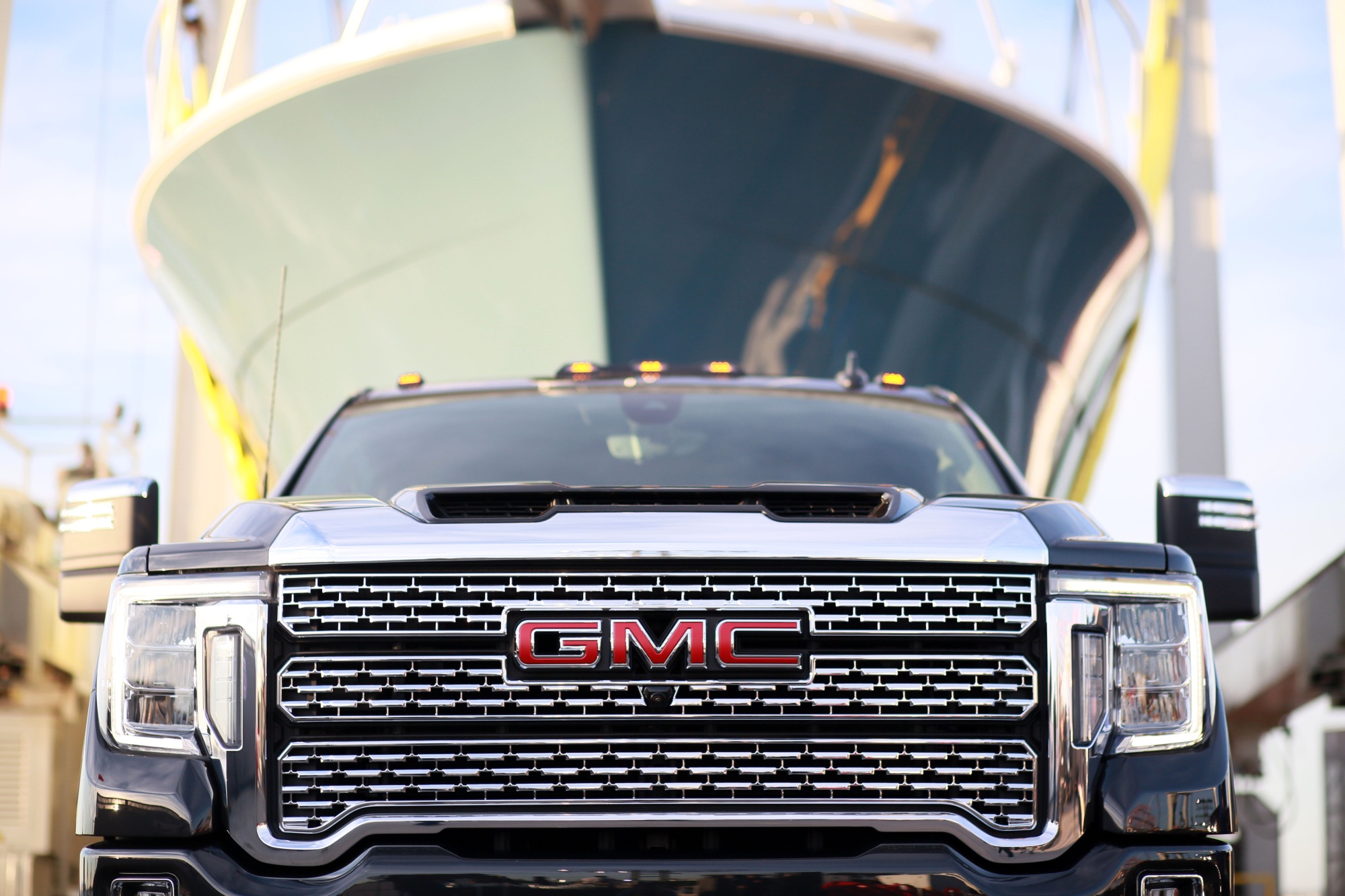
The mighty prow of a GMC Sierra Denali HD.
Photographer: Sandy Huffaker/Bloomberg
Business tax structure also encourages many business owners to opt for the bigger F-250 over the F-150, making the added cost almost negligible. Going large doesn't necessarily exact a major toll in fuel expenses, either: While pickups have gotten bigger they have also become — while not exactly green — certainly less gas guzzling. Equipped with a hybrid powertrain, the 2021 Ford F-150 can achieve 25 miles per gallon in the city, six more than a Honda Odyssey minivan. "We have gotten better at making them more efficient," says Benjamin Sovacool, a researcher who studies energy transitions.
But that doesn't mean the decision to buy a $50,000 truck with a 4,200-pound payload rating for the occasional trip to the golf course or hardware store is strictly rational. Personal vehicles are not merely functional appliances: They are used as refuges, fortresses and private enclaves, and serve as important signifiers of class and gender identity, as Sovacool explored in a 2018 study.
To Albert, the booming appeal of bigger and more brutish trucks reflects "a crisis of masculinity," he says. "Nothing could be more emasculating than driving a minivan. So you want the vehicle that's going to maintain your performative masculinity."
The fact that supersized pickup trucks were often deployed as political props (and weapons) during the Trump era did not escape the notice of scholars like Cara Daggett, a professor of political science at Virginia Tech. In a widely shared 2018 journal article, Daggett coined the term "petro-masculinity" to describe flamboyant expressions of fossil fuel use by men (and some women as well, but mostly men) as a reaction against social progress. To these drivers, "the affront of global warming or environmental regulations appear as insurgents on par with the dangers posed by feminists and queer movements seeking to leach energy and power from the state/traditional family," she wrote.
Petro-masculinity helps explain not only these vehicles' confrontational styling, but the often equally belligerent way in which they are operated.
The EPA estimates that more than half a million trucks — 15% of the diesel-powered pickups on U.S. roads — have had their emissions equipment modified over the last decade in order to increase their power and polluting potential. There's a cottage industry devoted to the practice of bypassing emissions standards; such modified vehicles are believed to emit as much pollution as 9 million emissions-compliant diesel trucks. While illegal, some drivers flaunt their ability to pollute, via the behavior known as "rolling coal," in which drivers of modified diesel trucks blow black smoke at targets of their disapproval (often Prius drivers or bicyclists).
"Burning fossil fuels can come to function as a knowingly violent experience," Daggett writes, "a reassertion of white masculine power on an unruly planet that is perceived to be increasingly in need of violent, authoritarian order."
Built for battle
Geopolitical factors have long played a role in car and truck design in the U.S.: Jeeps, of course, began as military vehicles adapted to civilian use, a heritage the company still proudly announces on its site, saying the brand is "forever tied to freedom, capability and adventure." The first iteration of GM's Hummer brand spun from the high-profile role that Humvee military vehicles used in the Persian Gulf War. Other manufacturers continue to cultivate connections to the military as well. Ford advertises its F-150 is made of "military-grade aluminum alloy" for the "working warrior."
In his excellent illustrated essay "About Face," cartoonist Nate Powell, whose father was an Air Force officer, explores the recent emergence of the overtly "paramilitary aesthetic" in truck and SUV design and connects it to recent U.S. "forever wars," in which regular troops have mixed with private security units, special forces and law enforcement officers in battlefields around the world. Many veterans of these campaigns employed up-armored civilian vehicles, and they brought a taste for such machines back home with them.
That aesthetic can be detected not only in the raised "militarized" grille height of pickup trucks, but also the popularity of aftermarket modifications like blacked-out windows and "bull bars" affixed to the front end. Together, the way these trucks look speaks to a "rejection of communication, reciprocity and legal accountability," Powell writes.
At their heart, these consumer choices also reflect something else, says Sovacool: fear. "We are questioning our place in the world, with globalization and Trump. We're also feeling really uncertain and unsafe — the pandemic, terrorism."
With its "bulletproof" stainless-steel skin and "bioweapon defense mode," perhaps no vehicle feels as precisely calibrated to the anxieties of its era as the Tesla Cybertruck. Such vehicles promise more than just "defensive security," wherein a larger vehicle at least theoretically protects its occupants better in a collision with a smaller vehicle: They are built to project "offensive security," Sovacool says.
"If you do need a vehicle that will go off road, carry lots of weapons or run over people," he says, "then these bigger vehicles do it better than these smaller ones."
Only in America
Threaded within the pickup's militaristic branding is a powerful appeal to national pride. U.S. automakers have long dominated pickup truck sales, which produce enormous profits for Detroit-based companies and employ a lot of domestic auto workers. No wonder there's such hesitancy among regulators to stand in the way of some of their more egregious styling trends or emissions loopholes. "In a way, critiquing them is seen as anti-American and anti-jobs," says Sovacool.
America's "Big Three" automakers dominate the large pickup market.
Photographer: Jack Smith/Bloomberg
In a 2016 essay for N+1, Albert also reflected on the burden of associations — nostalgic and nationalistic — that pickups carry: "To drive a thirsty truck is to live in a pre-EPA era, before the spikes in gas prices, before political correctness," he wrote. "To fill the bottomless tank of a pickup … is to practice the religion of the American Way. It is to affirm climate denial, petrol-adventurism, and American exceptionalism."
There are many ways to untangle pickup trucks from this trap and rein in their most destructive excesses. Federal regulators could revise the EPA mandates that the largest pickups now avoid, and impose stronger rules on pedestrian safety to make trucks and SUVs less lethal. The tax code could be reformed, so businesses that purchase the largest commercial trucks aren't rewarded with a 100% depreciation bonus on the first year. Cities could stiffen parking policies and raise vehicle fees so that such impractically scaled machines will be less appealing to buyers who have little need of their capabilities. But any such efforts can't be merely "technocratic," Daggett says — they must grapple with the broader societal forces that these supertrucks have tapped into.
"A lot of things are attached to fossil fuel culture because they are symbolically a part of a certain way of life or an identity," she says. "It's no longer possible to operate in the world and not understand that fossil fuels are violent. It's a kind of spectacular performance of power."
Why Unibody Pickups Like the Honda Ridgeline Are the Real Deal
More Ridgeline talk.
I know I sound like a broken record, but value of a dollar should matter. If you have $35,000 burning a hole in your pocket, and you are looking at buying a truck, would you buy one that drives like a car, or can actually work like Truck?
I think the auto industry is trying to sale us on the idea of unibody pickups like they've done with the SUV lines. While there is a place for that, I don't see it being that successful. At least in America.
The ideal of a small lightweight truck would fit a lot of boxes for people. Unfortunately sooner or later they will realize that what they paid for is a car without a trunk lid and for the money they could have actually bought a truck.
Is the pickup truck going to evolve into something closer to a crossover SUV? Are frame rails and big V8s on their way out? Is the whole world being swallowed up by the passenger-car-based cute-ute monster?
Could be.
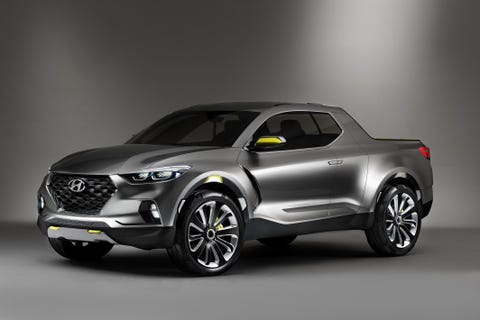
Honda just redesigned its Ridgeline, Ford is coming out with a Maverick, and even Hyundai is going to start selling a Santa Cruz pickup truck soon. The idea makes sense, at least on paper. All three of those trucks have one thing in common not shared with traditional trucks: They all ride on unibody architectures shared with other uniobody crossover utility vehicles. The Ridgeline shares chassis componentry with the Pilot, the Maverick shares with the Bronco Sport and Escape, and the Santa Cruz with the Santa Fe. This is a new thing in the pickup truck world.
Advertisement - Continue Reading Below
Since ancient times pickup trucks have been built on ladder frames, with the beds and cabs bolted directly to them. The fancy ones had rubber donuts between the cab and the frame. Some of the frames were even closed "Os" instead of open C-shaped cross sections. These new unibodies don't have frame rails, bolts, or donuts. They are all one big spaceframe structure, like an airplane fuselage or a Fabergé egg.
The Hyundai Santa Cruz, shown here in concept form, has an open bed but is called a "utility vehicle" by Hyundai.
Hyundai
There are advantages to this. The ride is almost always smoother in a unibody, the interior noise level is greatly reduced and the thing just generally behaves like a much more comfortable vehicle than something banging along on frame rails.
I just spent a week in the new 2021 Honda Ridgeline, for instance. It is delightful. Sure, I didn't haul a load of gravel to pave a driveway with, nor did I haul 800 highly polished Earl Anthony bowling balls. But most people don't do that. Now granted, ranchers, farmers, and contractors need big pickup trucks to haul live steers, this year's beet crop, and all that fiberboard for that kitchen remodel. But I'm going to go out on a limb here and say that most of the rest of the population doesn't actually need a full-size pickup truck on a frame. They need something more like the Honda Ridgeline I had all week.
I will leave it to psychiatrists to detail exactly why the vehicle we drive must be an extension of the personality we desperately hope to project to the world.
"I think what one defines a pickup truck to be is very much in the eyes of the buyer," said Ed Kim, VP of industry analysis at AutoPacific. "The reality is that most retail pickup buyers really just use these things as cars."
Advertisement - Continue Reading Below
And we've had car-based "pickups" before.
"El Caminos were based on cars and Rancheros were based on a car. So, you know, the idea of a car-based pickup isn't totally new."
The Ford Maverick unibody pickup truck takes a test-run down the assembly line.
Maverick Truck Club Forum
At first, the reception for unibody trucks like the Ridgeline was predictably anti-unibody. The trucks guys love to bash these new comfy unibody pickups. A look around the internet—generally the best source for all fact-based research—shows little interest in unibody pickups among traditional pickup truck buyers.
Many truck forums don't list any of the three new unibody pickups on their subject lines for topic talks. There are topic headings like "Ford," "Chevy," "Heavy Duty," and subjects like that, but none for these new vehicles. You do a search of discussion topics and "Ridgeline" appears only obliquely on a few, and then under the heading of whether they make good used truck deals for your aunt.
"Just a big sedan with a trunk instead of a bed," said commentor 'unit731' in one brand-specific forum. "But the Ridgeline is a fine vehicle. The average Joe or Jane don't really use a truck in the traditional sense. Now they will have a choice between the Honda and the Hyundai. For this type of truck."
"Honda should give up on trying to compete with the American pickup trucks, Toyota even knows they will never be able to go head-to-head with the Big 3 full-size pickups," replied 'easy62.'
Countered 'robr2': "They're not trying to compete with the Big 3 full-size trucks. They are trying to keep the Honda faithful in the brand should they want something with a bed."
Advertisement - Continue Reading Below
"A four-foot bed is totally useless to me," said 'turf3.'
"It's a 'lifestyle' truck," said 'HappyRider.' "I don't know of any Honda owner wishing for a truck."
The Ridgeline can get out and have fun in the deep sand.
Honda
But many in the truck-commenter community are warming to the idea, especially those who admit they don't need to tow and haul all that much.
"I've owned four pick-ups, all half-tons or HD, and quite honestly for the way I used my trucks I could get away with a Ridgeline," said Chris Chen on tfltruck.com. "Once you get past the image and stereotype of a 'truck guy,' I'm sure this would have fulfilled 99% of my needs and still give me the handling confidence of driving a car."
"It's a 'lifestyle' truck. I don't know of any Honda owner wishing for a truck." —HappyRider
"Kind of a pity about (people's) disdain (for the Ridgeline), really, because the Ridgeline is the absolute perfect vehicle for 99% of today's truck buyers: Manly-looking enough in styling, function, and name to allay any fears of being thought of as low-T," said "TJ." "And yet, it is still comfy and roomy enough to drive like any other open-backed SUV, and the bed fits a LOT of soccer balls."
I asked my friend and media colleague, the pickup truck expert Tim Esterdahl, publisher of Pickup Truck + SUV Talk, what he thought of the Ridgeline and, by extension, the Maverick and Santa Cruz.
"Ah the Ridgeline," he said. "I seem to get asked about this one quite often."
I asked if it was a real pickup truck.
Ridgeline with HPD upgrades.
Honda
"There is a lot of controversy these days on what is a 'real pickup.' With the Ridgeline's unibody construction, front-wheel-drive powertrain, and blah styling (2021 is aiming to address the latter complaint), there is a divide between truck guys. However, many truck guys have switched to the Ridgeline after discovering the better ride quality, lower ride height, and capabilities mirroring what their actual real-use of a pickup truck is for them.
Advertisement - Continue Reading Below
"Others scoff at the idea of such a pickup, saying it is simply a Honda Pilot with a bed and should be considered as such. For me, this whole debate has to be similar to when the Chevy El Camino and Ford Ranchero were on the scene. Were those sedans with a bed, a truck, or something else? I'd say something else and the Ridgeline fits into that category."
Esterdahl sees the future for unibody pickups as "a sliver of a large market, not the majority in my lifetime."
Ridgeline unibody
Honda
AutoPacific's Ed Kim sees a wider future for unibody pickups.
"I think they are going to represent a version of the future pickup," Kim said, citing the coming Hummer EV and Rivian EV as unibody examples, along with the Ridgeline. "I'm not sure that we'll ever fully move away from body-on-frame trucks because there are certain duty cycles that really require that type of construction, but think about what happened with SUVs over the last 20 years or so—when SUVs first became popular, there was definitely an expectation that SUVs needed to be built on tough truck frames. And then ultimately consumers realized that's not really how they used their SUVs and what they really wanted was more ride comfort, more refinement, and better fuel economy."
I think the unibody pickup will continue to increase in market share, the same way SUVs did as those became more and more comfortable. When the first crossovers came out we all smugly scoffed that they had no low-range transfer cases and were therefore useless. Well, look where the market is now: It's all crossovers all the time. Honda was late to the SUV party decades ago, relying on Isuzu (remember them?) to provide a couple of utes. Now Honda is still late to the truck party, but is plowing ahead into it full-steam, with its own unique take on what a pickup truck is, or will be. Ford will follow with the Maverick and Hyundai, too, with its Santa Cruz. Wonder who will be next?
Sign up to leave comments and weigh in on this most controversial of topics: Are unibody pickups real trucks? Does the badge make a difference in your determination?
Jason @BeardedOverland www.beardedadv.blogspot.com
The rise of nomad lifestyles in Arizona | AZ Big Media
The "Van life" has really been over romanticized as of late. I know a few people personally who have ditched the roots and ventured off in RV's, vans, and converted buses. It's a great way to live for a short time, but many settle down after a year or so.
It's a lot like the off-grid homesteaders, it's a lot of work to live outside the norm. It burns a lot of people out quickly.
The article mentions that those making minimum wage can not afford rent prices. Where we live in the Phoenix valley we pay close to $2k a month. That's a lot of money, but there are other places that are more affordable. I don't think a person making the minimum a company is required to pay should be considering paying high rent prices. There are a few other options to consider before going to the nuclear option of living in a van down by the river.
But I see things differently. I've told many a person that their first car should be a truck, one capable of towing a small RV, that way they can always have the option to go mobile. There are a lot of jobs that require someone to be mobile, mostly construction, but they pay well and if you have the ability to chase the work can be very lucrative.
That would be a better option than trying to pay high rent on minimum wage.
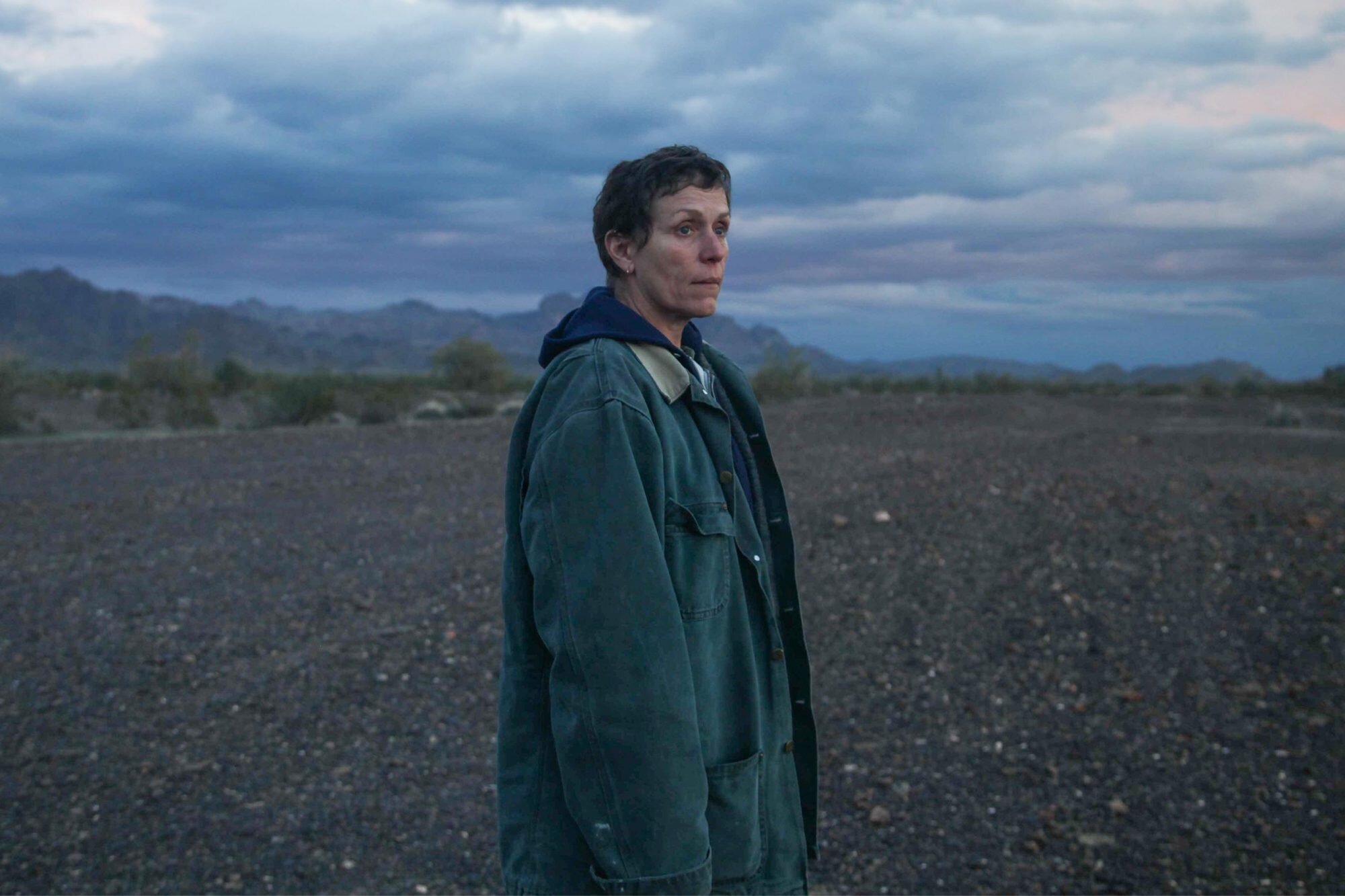
Recently depicted in the award-wining independent Nomadland, with Frances McDormand playing a woman who lives out of her van and travels across the USA taking on temporary work, the allure of the nomad lifestyle has been growing across the country in recent years. Arizona, which features significantly in the film, has become the center of this nomad lifestyle in a variety of different ways. Read on to see why the nomad lifestyle has risen in prominence and how Arizona is playing its part.
A Response to the Housing Crisis Across America
As explained in this recent Guardian article, many people choose the nomad lifestyle because they cannot afford to pay the rent anymore, or prefer to simply pocket the difference every month. This is because living like a nomad means that you only have to pay for the upkeep of your vehicle. With stats showing that a minimum wage job cannot cover the rent in basically any county in the country, and that nearly half of Americans spend a significant amount of their money on rent, it is likely that the freedoms of a nomad life are only going to increase in the future.
Relocation Assistance in Tucson
For people looking to live and work remotely in Arizona, Tucson is currently offering a killer program. Named Remote Tucson, a program offered by Startup Tucson, it helps both logistically and financially with the costs of moving. Money is given to its participants that totals an impressive $7,500 and it includes a program that pairs new residents with community ambassadors that show off their new home. Most importantly they offer free Wi-Fi, meaning that you can work on your laptop remotely whether you live out of a large RV, a Suzuki Swift or would rather live in a traditional home.
The Largest Nomad Gathering in the Country
Every year the nomad equivalent of Burning Man — both in terms of spirit and size — occurs in Quartzsite. Named the Rubber Tramp Rendezvous, it was started by the van-dwelling expert Bob Wells as a way of bringing together the entire community. Beginning with just a handful of people in 2010, the event now brings together thousands of people each year. Lasting over two weeks, the rally sees participants come to share tips on how to make nomadic living work, including lasting off solar power, finding places to legally stay, and how to obtain decent medical coverage — often including skipping over the border to Mexico.
Campground Rates in Arizona
If you're just thinking about living the nomad life yourself in Arizona, it's worth being acquainted with the cost of campgrounds. While the national average can be anywhere between $25 to $80, Arizona skews somewhere in the middle ground, with winter rates of around $40 and summer rates just over $50. It's also worth considering that the Bureau of Land Management offers land that is available to stay for free. Just be aware that one cannot usually stay for longer than two weeks.
Jason @BeardedOverland www.beardedadv.blogspot.com